
US Iran Ceasefire Deal negotiations have reached a historic milestone after both countries formally signed a memorandum of understanding designed to extend the ceasefire, reopen the Strait of Hormuz, and establish a roadmap for future diplomacy. The US Iran Ceasefire Deal is being viewed as one of the most important developments in Middle Eastern diplomacy in recent years, creating new hopes for stability after months of uncertainty and tension.
- A New Chapter Begins Through Diplomacy
- Electronic Signing Reflects a Modern Approach
- Why the Strait of Hormuz Matters
- Key Commitments Included in the Agreement
- Nuclear Discussions Remain a Key Focus
- Economic Benefits Could Reach Across the Globe
- Challenges Still Need to Be Addressed
- Regional Stability Could Improve
- International Reactions Highlight Global Interest
- What Happens Next?
- Final Thoughts
For global markets, regional governments, and millions of people following events in the Middle East, the US Iran Ceasefire Deal represents far more than a temporary pause in hostilities. It signals an attempt by both sides to move from confrontation toward dialogue while addressing some of the most sensitive issues that have defined relations between Washington and Tehran for decades.
The agreement arrives at a critical moment when regional stability, energy security, and diplomatic cooperation are more important than ever.
A New Chapter Begins Through Diplomacy
The announcement of the US Iran Ceasefire Deal marks a significant turning point.
Relations between the United States and Iran have experienced repeated periods of tension over the years. Political disagreements, security concerns, sanctions, and regional disputes have often dominated discussions between the two countries.
Against that backdrop, the decision to sign the US Iran Ceasefire Deal has attracted worldwide attention.
Rather than allowing tensions to continue escalating, both governments chose a diplomatic path that prioritizes communication, negotiation, and confidence-building measures.
Many international observers believe the agreement could provide a foundation for broader discussions in the future.
Electronic Signing Reflects a Modern Approach
One of the most unusual features of the US Iran Ceasefire Deal is the way it was finalized.
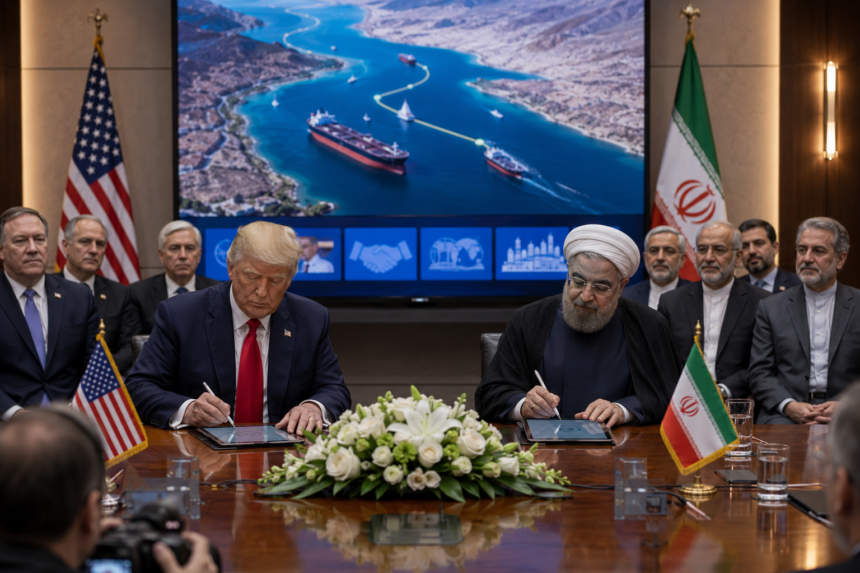
Instead of a traditional diplomatic ceremony attended by large delegations, the memorandum was reportedly signed electronically by both leaders.
The digital approach allowed the agreement to be completed quickly and efficiently.
Although the signing method was modern, the importance of the document remains substantial.
The electronic signatures transformed months of discussions into an official framework that now guides the implementation of the US Iran Ceasefire Deal.
Diplomatic experts say the process demonstrates how modern technology can support international negotiations when speed and flexibility are required.
Why the Strait of Hormuz Matters
One of the most important components of the US Iran Ceasefire Deal involves the reopening of the Strait of Hormuz.
This narrow waterway serves as one of the world’s most critical shipping routes.
A large share of global energy shipments travels through the strait every day.
When tensions increase in the region, concerns about shipping disruptions often lead to uncertainty across international markets.
The US Iran Ceasefire Deal seeks to restore confidence by supporting the safe movement of vessels through the area.
For businesses, governments, and consumers worldwide, the reopening of this strategic route could help reduce economic uncertainty and strengthen global trade stability.
Key Commitments Included in the Agreement
The US Iran Ceasefire Deal includes several important commitments designed to reduce tensions and create opportunities for future negotiations.
Major areas covered by the agreement include:
- Extension of the ceasefire
- Reopening of the Strait of Hormuz
- Restoration of maritime traffic
- Support for continued diplomatic discussions
- Frameworks for future security talks
- Economic cooperation measures
- Monitoring and compliance mechanisms
These commitments are intended to create a stable environment in which both countries can continue discussing more complex issues.
Rather than serving as a final settlement, the US Iran Ceasefire Deal establishes a foundation for future diplomacy.
Nuclear Discussions Remain a Key Focus
Even with the ceasefire in place, nuclear-related issues remain central to discussions between both countries.
The US Iran Ceasefire Deal creates an opportunity for future negotiations involving concerns that have shaped international relations for many years.
Diplomats recognize that progress in this area could play a major role in determining the long-term success of the agreement.
Many analysts believe the US Iran Ceasefire Deal could help create conditions where more comprehensive discussions become possible.
While major challenges remain, the existence of an agreed framework is already being viewed as an important step forward.
Future meetings are expected to focus heavily on these complex issues.
Economic Benefits Could Reach Across the Globe
The potential economic impact of the US Iran Ceasefire Deal extends far beyond the Middle East.
Energy markets closely monitor developments involving the Strait of Hormuz because of its importance to global oil supplies.
Any improvement in shipping conditions can influence market confidence and trade activity.
The US Iran Ceasefire Deal could help reduce uncertainty by supporting uninterrupted maritime operations.
Businesses that depend on reliable energy supplies are watching developments carefully.
Financial analysts suggest that stable shipping routes may contribute to greater confidence among investors and international markets.
As implementation progresses, the economic benefits of the US Iran Ceasefire Deal could become increasingly visible.
Challenges Still Need to Be Addressed
Despite the positive reaction to the US Iran Ceasefire Deal, significant challenges remain.
Years of political disagreements have created deep levels of mistrust between both sides.
Building confidence will require consistent action and long-term commitment.
The success of the US Iran Ceasefire Deal depends not only on promises but also on implementation.
Even minor disputes could create complications during the process.
That is why many experts remain cautiously optimistic rather than fully confident.
They argue that the coming weeks and months will reveal whether the agreement can deliver meaningful results.
Maintaining momentum will be essential.
Regional Stability Could Improve
The broader impact of the US Iran Ceasefire Deal could extend across the Middle East.
Regional governments have long expressed concerns about instability affecting trade, investment, and security.
If the agreement succeeds, it may help reduce tensions and encourage greater cooperation.
Many countries view regional stability as essential for economic growth and development.
The US Iran Ceasefire Deal has therefore generated interest far beyond Washington and Tehran.
Diplomatic observers note that successful implementation could improve confidence throughout the region.
While challenges remain, the agreement offers an opportunity to move toward a more stable environment.
International Reactions Highlight Global Interest
Governments around the world have responded closely to developments surrounding the US Iran Ceasefire Deal.
Many international observers have welcomed efforts to reduce tensions through diplomacy.
Business leaders, shipping companies, and market analysts are also monitoring implementation.
The agreement has attracted significant attention because of its potential influence on energy markets and international security.
At the same time, some analysts remain cautious.
They point out that previous diplomatic breakthroughs have sometimes struggled during implementation.
As a result, the success of the US Iran Ceasefire Deal will ultimately depend on actions rather than announcements.
The world will continue watching closely.
What Happens Next?
The signing of the US Iran Ceasefire Deal is only the beginning of a larger process.
Several important developments are expected in the coming months.
Key priorities include:
- Monitoring ceasefire compliance
- Reopening maritime routes fully
- Advancing diplomatic negotiations
- Addressing economic concerns
- Building confidence between both governments
- Creating pathways for broader agreements
Each stage will play an important role in determining the future of the US Iran Ceasefire Deal.
Success will require patience, cooperation, and consistent diplomatic engagement.
Final Thoughts
The US Iran Ceasefire Deal represents one of the most significant diplomatic developments of the year. By signing a memorandum of understanding, both governments have committed to extending the ceasefire, reopening the Strait of Hormuz, and continuing negotiations on critical issues.
Although important challenges remain, the US Iran Ceasefire Deal offers a rare opportunity to reduce tensions, strengthen regional stability, and encourage future cooperation. The coming months will determine whether the US Iran Ceasefire Deal becomes a lasting turning point in international relations or simply the first step in a longer diplomatic journey.
Read Other Interesting news here: TaskbarX Review