

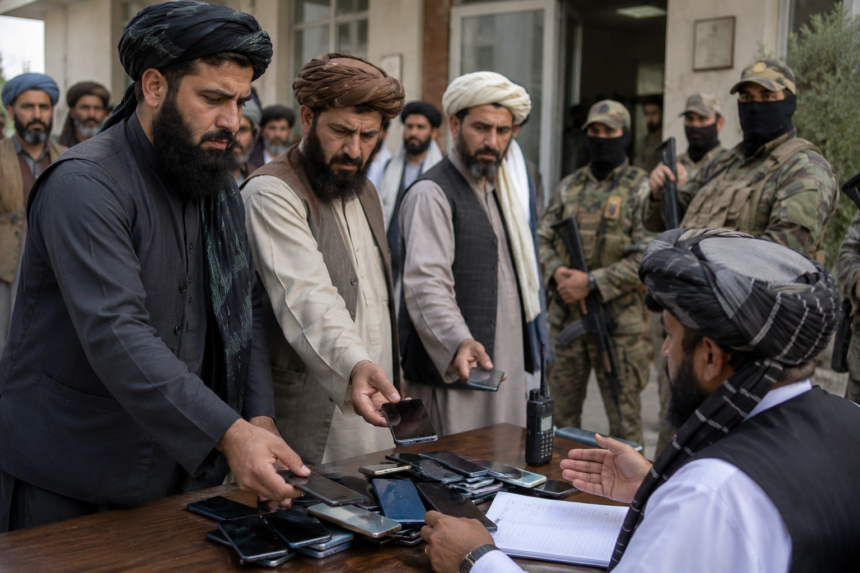
Taliban Smartphone Ban developments have sparked fresh debate across Afghanistan after reports emerged that officials were ordered to stop using smartphones and were even shown destroying their devices. The move, which is reportedly aimed at government workers, has raised concerns among citizens and observers who fear the restrictions could eventually spread beyond government offices and affect wider society.
- Why the Taliban Smartphone Ban Is Making Headlines
- Government Workers Appear to Be the Main Target
- Officials Shown Destroying Smartphones
- Growing Fears of Wider Restrictions
- The Role Smartphones Play in Daily Life
- Public Reaction Remains Mixed
- Technology and Governance in Afghanistan
- What Could Happen Next?
- Final Thoughts
For many people, smartphones have become an essential part of daily life. They provide access to communication, information, education, business opportunities, and digital services. That is why reports of a new Taliban Smartphone Ban have attracted significant attention both inside and outside Afghanistan.
While authorities appear to be focusing primarily on government employees, critics worry that the policy could represent the beginning of broader technology restrictions. The images and reports of officials destroying smartphones have only intensified those concerns.
As discussions continue, many Afghans are asking what the policy means, why it was introduced, and whether further restrictions could follow in the future.
Why the Taliban Smartphone Ban Is Making Headlines
The Taliban Smartphone Ban became international news after reports suggested government officials were instructed to stop using smartphones.
The decision immediately drew attention because smartphones play a central role in modern communication. From messaging and emails to social media and online services, these devices have become deeply integrated into everyday life.
Reports indicating that officials were seen destroying smartphones created even more concern.
For supporters of digital connectivity, the images symbolized a dramatic step backward from the technological progress that many people have become accustomed to over the past decade.
The policy has therefore become more than just a workplace rule. It has evolved into a wider discussion about technology, communication, and access to information in Afghanistan.
Government Workers Appear to Be the Main Target
Current reports suggest that the Taliban Smartphone Ban is primarily directed at government employees.
Authorities appear to believe that limiting smartphone use within government institutions could help address concerns related to workplace discipline, information security, or other administrative priorities.
Government workers are often responsible for handling sensitive information, which may be one factor influencing the decision.
However, because official details remain limited, many questions remain unanswered.
Observers are closely monitoring developments to determine whether the restrictions will remain confined to public sector offices or expand into other areas of society.
At present, the focus appears to be on officials and government personnel rather than the broader population.
Officials Shown Destroying Smartphones
One of the most widely discussed aspects of the Taliban Smartphone Ban involves reports that officials were shown destroying devices.
Images and videos reportedly circulated showing smartphones being physically damaged or discarded.
For many observers, these scenes became symbolic of the broader policy.
The destruction of devices generated strong reactions online and prompted debate about the necessity and effectiveness of such measures.
Supporters may view the action as a demonstration of commitment to the new rules.
Critics, however, argue that destroying technology sends a negative message about digital progress and modernization.
Regardless of perspective, the images helped turn the Taliban Smartphone Ban into a global news story.
Growing Fears of Wider Restrictions
Although the policy appears to focus on government employees, many observers are concerned about what could come next.
The biggest question surrounding the Taliban Smartphone Ban is whether it will remain limited or eventually expand to other sectors.
Technology experts and human rights observers have expressed concerns that broader restrictions could affect communication and access to information.
Many people depend on smartphones for education, employment, business operations, and social connections.
If restrictions were to spread beyond government institutions, the impact could become much more significant.
That possibility has fueled ongoing debate about the long-term implications of the policy.
The Role Smartphones Play in Daily Life
To understand why the Taliban Smartphone Ban has generated such attention, it is important to consider how essential smartphones have become.
Modern smartphones are far more than communication devices.
They are used for:
- Messaging and calls
- Online learning
- Banking and payments
- Business management
- News and information
- Navigation and transportation
- Social networking
For many people, smartphones serve as their primary connection to the digital world.
As a result, any restriction involving these devices naturally attracts strong public interest.
The discussion is therefore not only about technology but also about how people interact with information and opportunities in modern society.
Public Reaction Remains Mixed
The public response to the Taliban Smartphone Ban has been varied.
Some individuals support stricter controls in government institutions, arguing that officials should focus on their responsibilities without digital distractions.
Others believe the policy is unnecessary and could create additional challenges for workers who rely on smartphones to perform their duties.
Many observers are particularly concerned about the symbolic message created by reports of device destruction.
For critics, such actions suggest a rejection of technology that has become essential for economic and social development.
The debate continues as more details emerge about the implementation of the policy.
Technology and Governance in Afghanistan
The Taliban Smartphone Ban has also reopened broader discussions about the relationship between technology and governance.
Governments around the world regularly introduce rules governing the use of technology in workplaces and public institutions.
However, policies involving complete restrictions often attract greater scrutiny because of their potential impact on communication and productivity.
Afghanistan’s approach to technology has remained a topic of international interest in recent years.
As digital tools become increasingly important across every sector, decisions involving technology policy are likely to receive close attention both domestically and internationally.
The smartphone debate is therefore part of a much larger conversation about modernization and regulation.
What Could Happen Next?
The future of the Taliban Smartphone Ban remains uncertain.
Several key questions remain unanswered:
- Will the policy remain limited to government workers?
- How strictly will the rules be enforced?
- Will additional technology restrictions follow?
- How will government employees adapt?
- What impact will the policy have on daily operations?
The answers to these questions will determine the long-term significance of the decision.
For now, observers continue monitoring developments and waiting for additional clarification from authorities.
Final Thoughts
The Taliban Smartphone Ban has quickly become one of the most talked-about technology and policy stories in Afghanistan. Reports of government workers being ordered to stop using smartphones and images showing devices being destroyed have raised important questions about the future of digital communication in the country.
While the restrictions currently appear to focus on government employees, concerns remain about whether the policy could eventually expand further. As technology continues to shape modern life, decisions involving digital access and communication will likely remain at the center of public discussion.
The coming months may reveal whether the Taliban Smartphone Ban remains a limited workplace measure or develops into a broader national policy with far-reaching consequences.
Read Other Interesting news here: Iran Peace Deal