
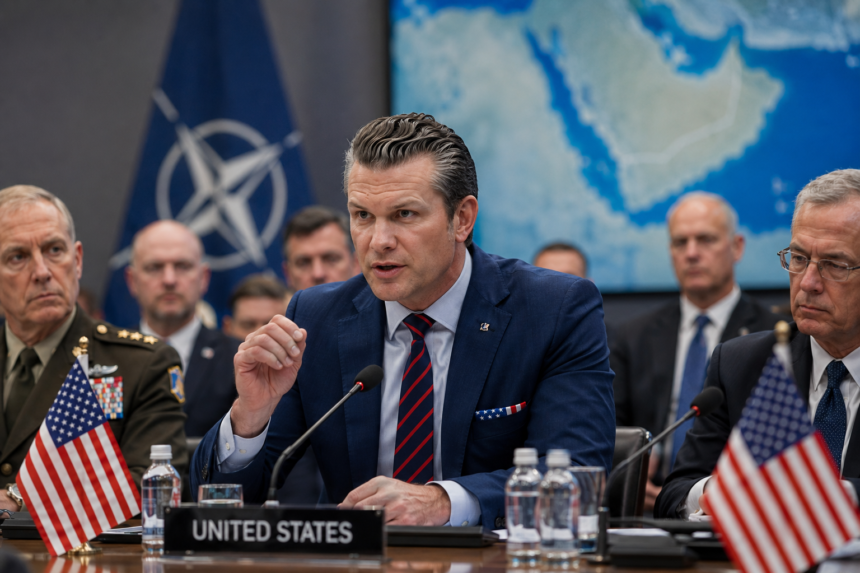
Iran Peace Deal developments have once again placed the Middle East at the center of global attention after US Defense Secretary Pete Hegseth issued a strong warning regarding the future of the newly signed agreement. Speaking in Brussels following meetings with NATO defense ministers, Hegseth made it clear that the United States is prepared to take decisive action if Iran fails to honor the commitments outlined in the deal.
- A Fragile Moment for Regional Stability: Iran Peace Deal
- Hegseth Sends a Clear Message: Iran Peace Deal
- The Threat of Renewed Military Action: Iran Peace Deal
- An Ironclad Blockade Remains an Option: Iran Peace Deal
- NATO Allies Come Under Fire: Iran Peace Deal
- Concerns About Risks to American Personnel: Iran Peace Deal
- Mixed Reactions to the Agreement: Iran Peace Deal
- Why the World Is Watching Closely: Iran Peace Deal
- What Happens Next?
- Final Thoughts
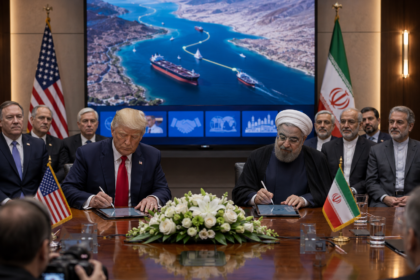
The warning came less than a day after both sides signed an agreement designed to reduce tensions and create a pathway toward greater stability. While many welcomed the diplomatic breakthrough, Hegseth’s remarks served as a reminder that the agreement remains conditional and dependent on compliance.
His comments have sparked new discussions about the future of US-Iran relations, the role of NATO allies, and the possibility of renewed military action if negotiations fail.
A Fragile Moment for Regional Stability: Iran Peace Deal
The Iran Peace Deal arrives at a time when the Middle East continues to face significant political and security challenges.
Recent tensions raised concerns among governments, businesses, and international organizations. The possibility of wider regional instability created uncertainty in energy markets and increased fears of disruption across major shipping routes.
Against that backdrop, the signing of the agreement was seen as a positive development.
However, Hegseth’s warning highlights that peace remains fragile.
The agreement may have created an opportunity for diplomacy, but its long-term success depends on whether both sides fulfill their obligations.
For now, the situation remains under close international observation.
Hegseth Sends a Clear Message: Iran Peace Deal
During his appearance in Brussels, Hegseth left little room for ambiguity.
He stated that the United States is fully prepared to respond if Iran does not comply with the terms of the agreement.
According to Hegseth, President Donald Trump has already made the administration’s position clear.
The defense secretary emphasized that any violation of the agreement could lead to renewed military measures.
His comments were intended to reinforce the seriousness of the commitments made under the deal.
While diplomacy remains the preferred path, Washington wants Tehran to understand that consequences remain available if promises are not kept.
The statement immediately became one of the most discussed developments following the signing of the agreement.
The Threat of Renewed Military Action: Iran Peace Deal
One of the strongest elements of Hegseth’s remarks involved the possibility of military intervention.
He explained that the United States remains capable of restarting operations if Iran fails to meet its responsibilities.
This warning reflects Washington’s effort to maintain leverage while pursuing negotiations.
Military analysts note that such statements often serve two purposes.
First, they reassure allies that security commitments remain intact.
Second, they signal to adversaries that diplomatic agreements do not eliminate the possibility of future action.
For supporters of the agreement, the hope is that such warnings will encourage compliance rather than confrontation.
Nevertheless, the possibility of renewed military operations remains one of the most significant aspects of Hegseth’s comments.
An Ironclad Blockade Remains an Option: Iran Peace Deal
Beyond military action, Hegseth also discussed the possibility of reimposing what he described as an “ironclad blockade.”
Such a measure would represent a major escalation in economic and strategic pressure.
Blockades can affect shipping, trade, and regional commerce, making them powerful tools in international disputes.
The defense secretary stressed that the United States possesses the capability to implement these measures if necessary.
His remarks suggest that Washington intends to maintain multiple options as it monitors compliance with the agreement.
For Iran, the warning serves as a reminder that the economic consequences of non-compliance could be substantial.
For global markets, it highlights the continued importance of developments in the region.
NATO Allies Come Under Fire: Iran Peace Deal
While much attention focused on Iran, Hegseth also directed criticism toward certain NATO members.
According to the defense secretary, several allies failed to provide the level of support that Washington expected during operations related to Iran.
He specifically referenced difficulties involving military bases, ports, and overflight permissions.
Hegseth argued that these obstacles complicated operations and created unnecessary challenges for US forces.
His criticism reflected frustration within parts of the American administration regarding burden-sharing among allies.
The comments are likely to generate discussion within NATO circles, particularly as members continue debating defense responsibilities and collective security commitments.
Concerns About Risks to American Personnel: Iran Peace Deal
Another key part of Hegseth’s remarks focused on the safety of American service members.
He argued that denying predictable access to critical infrastructure increased risks for US military personnel.
According to Hegseth, access to bases, ports, and airspace should not have been a matter of political debate when addressing threats that affect both American and European interests.
The defense secretary’s comments highlighted broader concerns about military cooperation during periods of crisis.
Supporters of his position argue that allies should provide greater support during joint security challenges.
Critics, however, may view such issues through the lens of national sovereignty and domestic political considerations.
Regardless of perspective, the debate has added another dimension to discussions surrounding the agreement.
Mixed Reactions to the Agreement: Iran Peace Deal
The Iran Peace Deal has generated a wide range of reactions around the world.
Some observers welcomed the agreement as an important step toward reducing tensions and preventing further conflict.
For these supporters, the deal represents an opportunity to pursue diplomacy rather than military confrontation.
Others remain skeptical.
They point to the long history of disagreements between the United States and Iran and question whether both sides can maintain trust throughout the implementation process.
Some analysts also argue that the agreement reflects broader geopolitical realities rather than a genuine resolution of underlying disputes.
The combination of optimism and caution has shaped much of the international response.
Why the World Is Watching Closely: Iran Peace Deal
The implications of the Iran Peace Deal extend far beyond the two countries involved.
Regional stability affects global energy supplies, international trade routes, and broader security concerns.
Any development involving Iran and the United States naturally attracts attention from governments, investors, and international organizations.
The situation is particularly important because of the strategic significance of the Gulf region.
Shipping routes, energy infrastructure, and regional alliances all play critical roles in the global economy.
As a result, even small developments can influence markets and diplomatic relations.
The agreement therefore carries significance well beyond its immediate political context.
What Happens Next?
The next stage will focus on implementation.
Several important questions remain unanswered:
- Will both sides fully comply with the agreement?
- Can trust be maintained during negotiations?
- Will regional tensions continue to decrease?
- How will allies respond to future developments?
- What role will diplomacy play in addressing remaining disputes?
These questions will shape the future of the agreement.
The coming weeks and months are likely to be crucial.
Observers expect continued monitoring of compliance as both sides work through the early stages of implementation.
Final Thoughts
The Iran Peace Deal represents a significant diplomatic development, but Pete Hegseth’s comments demonstrate that challenges remain. While the agreement offers hope for stability and dialogue, the United States has made it clear that compliance is non-negotiable.
Hegseth’s warning about renewed military action and the possibility of an ironclad blockade underscores the high stakes involved. At the same time, his criticism of NATO allies highlights broader debates about international cooperation and shared security responsibilities.
For now, the agreement provides an opportunity to move away from confrontation. Whether that opportunity evolves into lasting peace will depend on the actions taken by all parties in the weeks ahead.
Read Other Interesting news here: US Iran Ceasefire Deal