
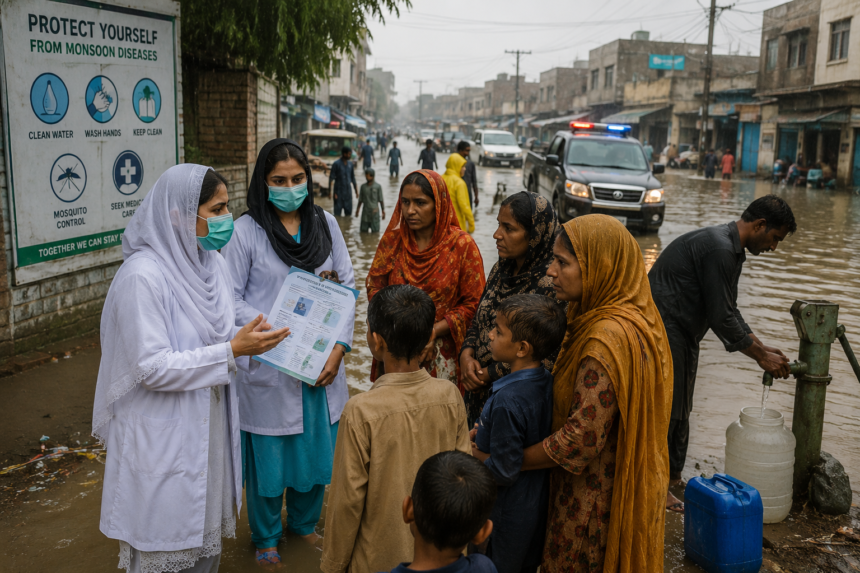
Monsoon Disease Prevention has become a major public health priority after Pakistan’s National Institute of Health (NIH) issued a fresh advisory warning about the increased risk of infectious diseases during the rainy season. As monsoon rains arrive across the country, health authorities are urging government departments, healthcare facilities, and communities to strengthen preparedness and disease control measures.
- Why Monsoon Season Increases Disease Risks: Monsoon Disease Prevention
- Diseases Highlighted in the NIH Advisory: Monsoon Disease Prevention
- Acute Watery Diarrhea
- Cholera
- Typhoid Fever
- Malaria
- Dengue Fever
- Chikungunya
- Leptospirosis
- Viral Hepatitis A and E
- Flooding Creates Serious Public Health Challenges: Monsoon Disease Prevention
- Population Displacement Raises Additional Concerns
- The Importance of Early Detection and Surveillance
- How Healthcare Facilities Can Prepare
- Practical Steps for Monsoon Disease Prevention
- Why Preparedness Matters More Than Ever
- Final Thoughts
Every year, the monsoon season brings much-needed rainfall. However, it also creates ideal conditions for the spread of dangerous diseases. Heavy rain, flooding, stagnant water, and contaminated water supplies can quickly turn into serious health threats if preventive measures are not taken in time.
The latest NIH advisory highlights the growing risks associated with monsoon-related illnesses and emphasizes the importance of surveillance, early detection, and rapid response. With millions of people potentially affected, Monsoon Disease Prevention is no longer just a health recommendation—it is a necessity.
Why Monsoon Season Increases Disease Risks: Monsoon Disease Prevention
The arrival of monsoon rains changes environmental conditions dramatically.
While rainfall helps agriculture and water supplies, it can also create a perfect environment for disease transmission.
According to the NIH advisory, several factors contribute to increased health risks during the monsoon season:
- Heavy rainfall
- Flooding
- Waterlogging
- Disruption of sanitation systems
- Contamination of drinking water
- Increased mosquito breeding
These conditions allow bacteria, viruses, and disease-carrying insects to spread more easily.
As a result, healthcare systems often experience a rise in infectious disease cases during this period.
This is why Monsoon Disease Prevention remains a critical concern for health authorities across Pakistan.
Diseases Highlighted in the NIH Advisory: Monsoon Disease Prevention
The NIH warning specifically identifies several diseases that become more common during the monsoon season.
These illnesses can range from mild infections to severe conditions requiring hospitalization.
Acute Watery Diarrhea
Contaminated water supplies often lead to outbreaks of acute watery diarrhea.
Poor sanitation and exposure to unsafe drinking water significantly increase infection risks.
Children and elderly individuals are particularly vulnerable.
Cholera
Cholera remains one of the most dangerous waterborne diseases during periods of flooding and water contamination.
Without prompt treatment, severe dehydration can occur rapidly.
The NIH has emphasized preventive measures to reduce transmission.
Typhoid Fever
Typhoid spreads through contaminated food and water.
Monsoon conditions often increase exposure to unsafe water sources, raising infection risks in affected communities.
Malaria
Mosquito populations tend to increase after heavy rainfall.
Stagnant water becomes an ideal breeding ground for mosquitoes that transmit malaria.
Preventing mosquito breeding is therefore a key part of Monsoon Disease Prevention efforts.
Dengue Fever
Dengue continues to be one of the most closely monitored diseases during Pakistan’s monsoon season.
Mosquitoes carrying dengue virus can spread quickly in urban and rural areas where water accumulates.
Public awareness and vector control measures play a crucial role in limiting outbreaks.
Chikungunya
Like dengue, chikungunya is transmitted by mosquitoes.
Symptoms often include fever and severe joint pain.
The disease can spread rapidly when mosquito populations increase.
Leptospirosis
Leptospirosis is less commonly discussed but remains a significant health concern during flooding events.
The infection can spread through contact with water contaminated by animal waste.
Viral Hepatitis A and E
Contaminated drinking water can also increase cases of hepatitis A and hepatitis E.
These infections affect the liver and often spread in areas where sanitation systems have been compromised.
Flooding Creates Serious Public Health Challenges: Monsoon Disease Prevention
Flooding remains one of the biggest drivers of disease outbreaks during monsoon season.
When floodwaters enter communities, they often contaminate water supplies and damage sanitation infrastructure.
This creates multiple public health risks at the same time.
Communities affected by flooding may experience:
- Unsafe drinking water
- Poor sanitation conditions
- Reduced access to healthcare
- Increased exposure to disease-carrying insects
These factors significantly increase the likelihood of disease transmission.
As a result, Monsoon Disease Prevention strategies must focus heavily on flood-prone areas.
Population Displacement Raises Additional Concerns
The NIH advisory also highlights the risks associated with population displacement.
During severe flooding, many families are forced to leave their homes and seek temporary shelter.
While these shelters provide safety from floodwaters, they can also create new health challenges.
Overcrowding
Temporary shelters often accommodate large numbers of people in limited spaces.
Overcrowding increases the risk of infectious diseases spreading from person to person.
Limited Access to Clean Water
Displaced populations may struggle to access safe drinking water.
This increases exposure to waterborne diseases and gastrointestinal infections.
Interrupted Healthcare Services
Flood-related disruptions can make it difficult for individuals to access healthcare facilities.
Routine vaccination programs, medical treatments, and disease monitoring efforts may also be affected.
These challenges make preparedness essential before monsoon conditions worsen.
The Importance of Early Detection and Surveillance
One of the strongest messages in the NIH advisory is the importance of disease surveillance.
Early detection allows health authorities to identify outbreaks before they become widespread.
Why Surveillance Matters
Effective surveillance helps officials:
- Detect unusual disease patterns
- Monitor infection rates
- Identify outbreak hotspots
- Coordinate response efforts
- Protect vulnerable communities
The faster authorities identify a potential outbreak, the more effectively they can respond.
This proactive approach is a cornerstone of successful Monsoon Disease Prevention programs.
How Healthcare Facilities Can Prepare
Healthcare facilities play a vital role during monsoon season.
Hospitals, clinics, and health departments must be prepared to manage increased patient volumes and respond quickly to outbreaks.
Strengthening Emergency Response
Facilities should ensure:
- Adequate medical supplies
- Sufficient staffing levels
- Emergency treatment protocols
- Disease reporting systems
Community Education
Healthcare providers can also help educate the public about disease prevention measures.
Awareness campaigns often play an important role in reducing infection rates.
Practical Steps for Monsoon Disease Prevention
Although government agencies play a major role, individuals can also take steps to protect themselves and their families.
Important preventive measures include:
Ensure Safe Drinking Water
Always use clean and safe drinking water.
If water quality is uncertain, boil or properly treat water before consumption.
Maintain Good Hygiene
Regular handwashing remains one of the simplest and most effective ways to prevent disease transmission.
Eliminate Standing Water
Mosquito breeding can be reduced by removing stagnant water around homes and communities.
Seek Medical Attention Early
Anyone experiencing symptoms such as fever, diarrhea, vomiting, or severe weakness should seek medical advice promptly.
Early treatment often prevents complications.
Why Preparedness Matters More Than Ever
The NIH advisory serves as a reminder that disease prevention begins before outbreaks occur.
Waiting until infections start spreading can make containment much more difficult.
Preparedness involves:
- Strong surveillance systems
- Public awareness campaigns
- Safe water initiatives
- Effective healthcare coordination
- Community participation
When these elements work together, disease outbreaks can often be minimized or prevented entirely.
This is why health officials continue emphasizing Monsoon Disease Prevention across the country.
Final Thoughts
Monsoon Disease Prevention remains one of Pakistan’s most important public health priorities during the rainy season. The latest advisory from the National Institute of Health (NIH) highlights the increased risks of diseases such as cholera, typhoid, malaria, dengue, chikungunya, leptospirosis, and viral hepatitis A and E as monsoon conditions create favorable environments for disease transmission.
Heavy rainfall, flooding, water contamination, and mosquito breeding can quickly lead to outbreaks if preventive measures are not implemented. Through stronger surveillance, early detection, healthcare preparedness, and community awareness, authorities hope to reduce illness and save lives throughout the monsoon season.
As the rains continue, individuals, healthcare providers, and government agencies all have a role to play. By following health recommendations and staying alert to potential risks, communities can better protect themselves and support effective Monsoon Disease Prevention efforts across Pakistan.
Read Other Interesting news here: Galaxy Z Flip 6 Update