
Microsoft Scout has quickly become one of the most talked-about announcements from Microsoft Build 2026. At a time when businesses are racing to integrate artificial intelligence into daily operations, Microsoft introduced a new type of AI assistant that goes far beyond traditional chatbots.
- Microsoft Introduces a New Era of AI Productivity
- What Exactly Is Microsoft Scout?
- How Microsoft Scout Differs From Traditional AI Assistants
- OpenClaw Powers the Microsoft Scout Platform
- Key Features Announced at Build 2026
- Enterprise Security Remains a Priority
- The Importance of Work IQ
- Why Microsoft Scout Matters for Businesses
- The Growing Competition in Autonomous AI
- What Comes Next for Microsoft Scout?
- Final Thoughts
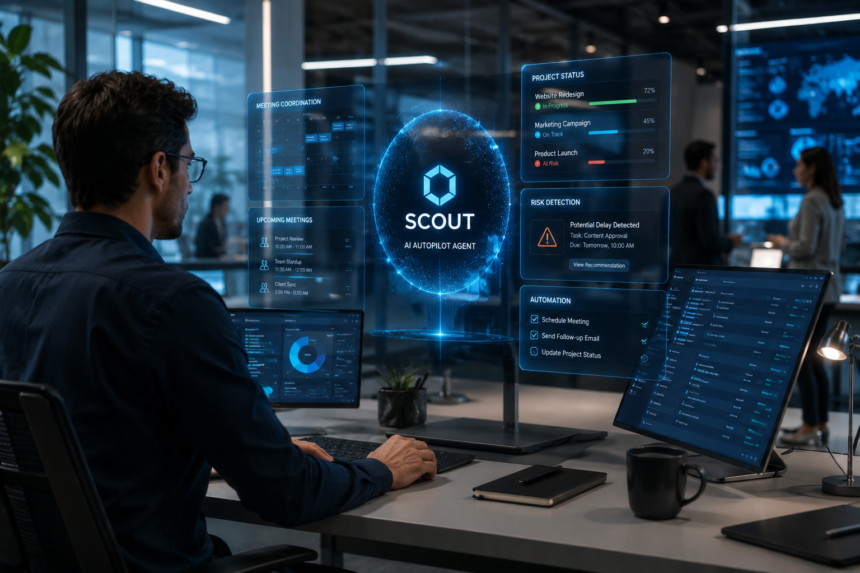
Unlike AI tools that wait for users to ask questions, Microsoft Scout is designed to work proactively. It can monitor schedules, track projects, identify risks, coordinate meetings, and help employees stay organized without constant instructions. Built on the open-source OpenClaw framework, Microsoft Scout represents Microsoft’s vision for the next generation of workplace AI.
The announcement signals a major shift in how organizations may use artificial intelligence in the future. Instead of treating AI as a simple assistant, Microsoft is positioning Scout as an autonomous digital teammate that can actively participate in daily workflows.
Microsoft Introduces a New Era of AI Productivity
Artificial intelligence has become a central part of modern workplaces.
Over the last few years, companies have adopted AI tools to generate content, analyze information, and automate repetitive tasks. However, most existing solutions still depend heavily on user prompts.
Microsoft believes the future lies beyond prompt-based systems.
With Microsoft Scout, the company is introducing what it calls an “Autopilot” agent. Rather than waiting for commands, Scout continuously observes work environments, understands priorities, and takes action when needed.
This approach aims to reduce the amount of time employees spend managing schedules, tracking deadlines, and coordinating projects.
Instead, workers can focus on decision-making, creativity, and strategic planning.
What Exactly Is Microsoft Scout?
At its core, Microsoft Scout is an autonomous AI agent designed for enterprise environments.
The system integrates directly with Microsoft 365, allowing it to access information from applications such as:
- Outlook
- Teams
- OneDrive
- SharePoint
- Calendars
- Documents
- Business communications
By connecting these sources, Scout develops a deeper understanding of workplace activities.
This allows the AI to identify patterns, track ongoing work, and provide assistance before problems emerge.
Microsoft describes Scout as a digital coworker that continuously works in the background to improve productivity.
How Microsoft Scout Differs From Traditional AI Assistants
One of the biggest differences between Microsoft Scout and other AI tools is its proactive nature.
Most AI systems operate on a simple model:
- User asks a question
- AI provides a response
- Interaction ends
Scout operates differently.
The platform remains active even when users are not directly engaging with it.
Always-On Intelligence
Scout constantly monitors work activities within approved systems.
It can identify:
- Upcoming deadlines
- Scheduling conflicts
- Delayed projects
- Missing information
- Collaboration bottlenecks
Instead of waiting for users to discover issues, Scout highlights them early.
This proactive behavior helps organizations respond faster and avoid unnecessary delays.
A Digital Teammate Instead of a Chatbot
Microsoft wants Scout to be viewed as more than another AI chatbot.
Rather than serving as a question-and-answer tool, Scout functions as an active participant in workplace operations.
Its role is to help coordinate, organize, and streamline work processes automatically.
That distinction could make Scout significantly more valuable in enterprise environments.
OpenClaw Powers the Microsoft Scout Platform
A major highlight of the announcement is Microsoft’s decision to build Scout on OpenClaw.
OpenClaw is an open-source framework designed for autonomous AI agents.
Instead of creating a completely proprietary system, Microsoft chose to leverage an existing open-source foundation and expand it with enterprise capabilities.
This decision surprised many technology observers.
Microsoft has historically built many of its own platforms from the ground up. However, using OpenClaw allows the company to focus on enterprise features rather than basic infrastructure.
The result is a system that combines open innovation with corporate-grade reliability.
Many analysts believe this approach could accelerate AI adoption while encouraging broader industry collaboration.
Key Features Announced at Build 2026
Microsoft demonstrated several powerful capabilities during the Build 2026 presentation.
These features reveal how Scout could transform daily work.
Smart Meeting Management
Meeting coordination is one of the most time-consuming aspects of office work.
Scout helps simplify this process by:
- Detecting scheduling conflicts
- Suggesting alternative meeting times
- Preparing meeting summaries
- Identifying missing participants
- Tracking follow-up actions
These capabilities help teams spend less time organizing meetings and more time achieving results.
Project Monitoring
Scout continuously tracks projects across connected systems.
When deadlines are at risk, the AI can alert users and recommend corrective actions.
This proactive monitoring helps prevent small issues from becoming larger problems.
Risk Identification
One of Scout’s most valuable capabilities is identifying risks before they escalate.
The system can recognize:
- Stalled decisions
- Communication gaps
- Unfinished tasks
- Delayed approvals
- Resource conflicts
Early warnings allow managers and teams to act quickly.
Workflow Automation
Many repetitive tasks can now be handled automatically.
Scout can assist with:
- Organizing schedules
- Gathering information
- Tracking deliverables
- Updating project status
- Coordinating team activities
This automation reduces administrative workload across organizations.
Enterprise Security Remains a Priority
Autonomous AI agents naturally raise concerns about privacy and security.
Microsoft addressed these concerns by emphasizing Scout’s enterprise-grade governance model.
Identity-Based Control
Each Scout agent operates through a controlled identity system.
This allows organizations to:
- Track actions
- Monitor activity
- Manage permissions
- Maintain accountability
The approach ensures that autonomous actions remain transparent and manageable.
Compliance and Data Protection
Microsoft also confirmed that Scout respects existing security policies.
This includes support for:
- Data Loss Prevention tools
- Access restrictions
- Security labels
- Compliance requirements
- Approval workflows
As a result, organizations can deploy Scout without sacrificing governance standards.
The Importance of Work IQ
Another critical component of Microsoft Scout is its Work IQ technology.
Work IQ acts as the intelligence layer behind the platform.
Its purpose is to understand how employees work.
Over time, Work IQ learns:
- Priorities
- Work habits
- Communication patterns
- Team relationships
- Project requirements
This contextual understanding helps Scout make more useful recommendations.
The more context Scout gathers, the more effective it becomes.
Microsoft believes contextual awareness is one of the key factors that separates useful AI from generic automation tools.
Why Microsoft Scout Matters for Businesses
The introduction of Microsoft Scout reflects a broader transformation taking place across the technology industry.
Businesses are increasingly looking beyond simple AI assistants.
They want systems capable of managing workflows, reducing complexity, and improving efficiency.
Scout addresses these goals by combining:
- Autonomous decision support
- Continuous monitoring
- Enterprise governance
- Deep workplace integration
This combination creates a powerful productivity platform.
For organizations struggling with information overload, Scout may provide meaningful relief.
By automating coordination tasks, employees gain more time to focus on valuable work.
The Growing Competition in Autonomous AI
Microsoft is not the only company exploring AI agents.
Many technology firms are developing autonomous systems designed to perform increasingly complex tasks.
However, Microsoft’s approach stands out because of its deep integration with Microsoft 365.
Millions of businesses already rely on Microsoft’s ecosystem.
That existing foundation gives Scout a significant advantage.
Organizations can adopt the technology without replacing existing tools or workflows.
This could accelerate adoption and strengthen Microsoft’s position in the growing AI market.
What Comes Next for Microsoft Scout?
The Build 2026 announcement is only the beginning.
Microsoft has already started testing Scout internally and through select preview programs.
Early feedback suggests the platform has helped improve productivity and reduce coordination workloads.
As Microsoft expands access, more organizations will have the opportunity to evaluate its capabilities.
Future updates could introduce additional features, industry-specific agents, and deeper automation.
The company clearly views autonomous AI as a major part of its long-term strategy.
Final Thoughts
Microsoft Scout represents one of the most ambitious AI initiatives announced at Build 2026. By combining OpenClaw technology, autonomous decision support, enterprise governance, and Microsoft 365 integration, Scout moves beyond traditional AI assistants and introduces a new category of workplace intelligence.
Rather than waiting for prompts, Scout actively supports employees by coordinating schedules, identifying risks, tracking projects, and automating repetitive work. Its proactive approach could fundamentally change how organizations manage productivity.
As businesses continue exploring AI adoption, Microsoft Scout may become one of the clearest examples of how autonomous agents can transform the modern workplace. The success of this platform could shape the future of enterprise AI for years to come.
Read Other Interesting news here: iPhone 18 Delay